SOCIAL IMPACT · FULLY IMPLEMENTED
Creating an interactive experience for romance fraud education and prevention
Duration: 5 months (Jun - Sep 2025)
Role: Product designer
Team: 3 designers, 4 engineers, 1 PM
Skills: Prototyping, Information design, Interactive design, XFN collaboration, Graphic design
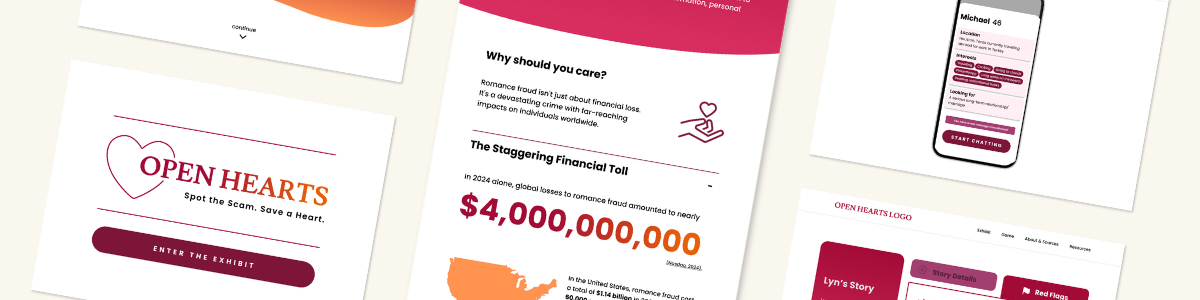
In a small cross-functional team, I designed Open Hearts, an interactive web exhibit created to educate people about romance fraud, how scammers manipulate their victims, and how individuals can protect themselves. We designed the experience as an interactive exhibit that guides users through the topics: users are able to learn what romance fraud is, explore real-world experiences, test their understanding through an interactive minigame, and finish with resources. This project focuses on making an often-overlooked form of fraud more understandable.
DEFINING THE PROBLEM
Romance fraud is a growing form of fraud that exploits emotional connection, but there are few resources that help people understand it.
Romance fraud occurs when someone creates a false romantic or emotional relationship with a victim in order to gain something from them, most commonly money or personal information. While existing resources provide valuable information and reporting options, much of the available information is presented through articles, statistics, government pages, and other text-heavy resources. For someone unfamiliar with romance fraud, simply providing more information does not necessarily mean they will understand, remember, or know how to apply it. The challenge was turning complex research into an experience people would actually engage with.
Information we needed to communicate
1. Definitions: What is romance fraud?
2. Process: How do scammers build trust and manipulate victims? What behaviors should someone look out for?
3. Impact: What does experiencing romance fraud actually look and feel like?
4. Action: What should someone do if they encounter it?
SOLUTION OVERVIEW
Open Hearts turns romance fraud education into an interactive journey rather than a collection of informational pages.
Presenting all the needed information at once risked overwhelming users or encouraging them to simply skim through the content. At the same time, reducing the information too much could prevent users from understanding the complexity of how romance fraud works. Open Hearts is a guided interactive experience that moves users from understanding the issue to applying what they learned.
Learn → Understand the impact → Test your knowledge → Take action
Learning about romance fraud
The exhibit begins by establishing a foundation with key definitions, terminology, statistics, and the typical progression of a romance fraud scheme. These pieces are broken into smaller sections, making the process understandable without assuming that users have prior knowledge about fraud.
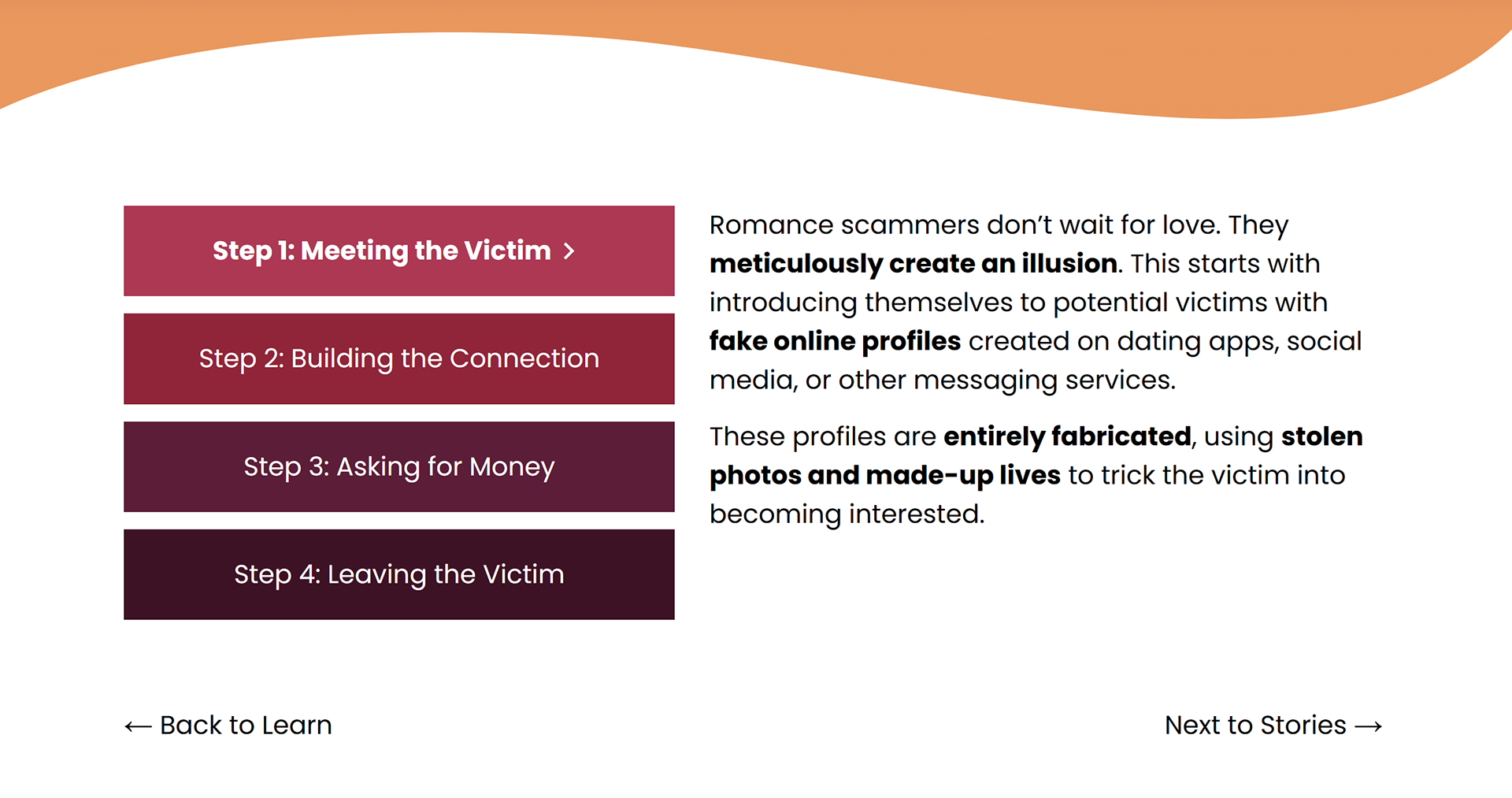
The steps of romance fraud can be explored through simple click interactions
Real stories and human impact
Statistics can communicate the scale of a problem, but they do not always communicate what it feels like to experience it. The second section introduces real-life cases and victim experiences alongside research on the psychological impact of romance fraud. By following the research with personal stories, the exhibit moves users from understanding what romance fraud is to understanding why it can be so devastating.
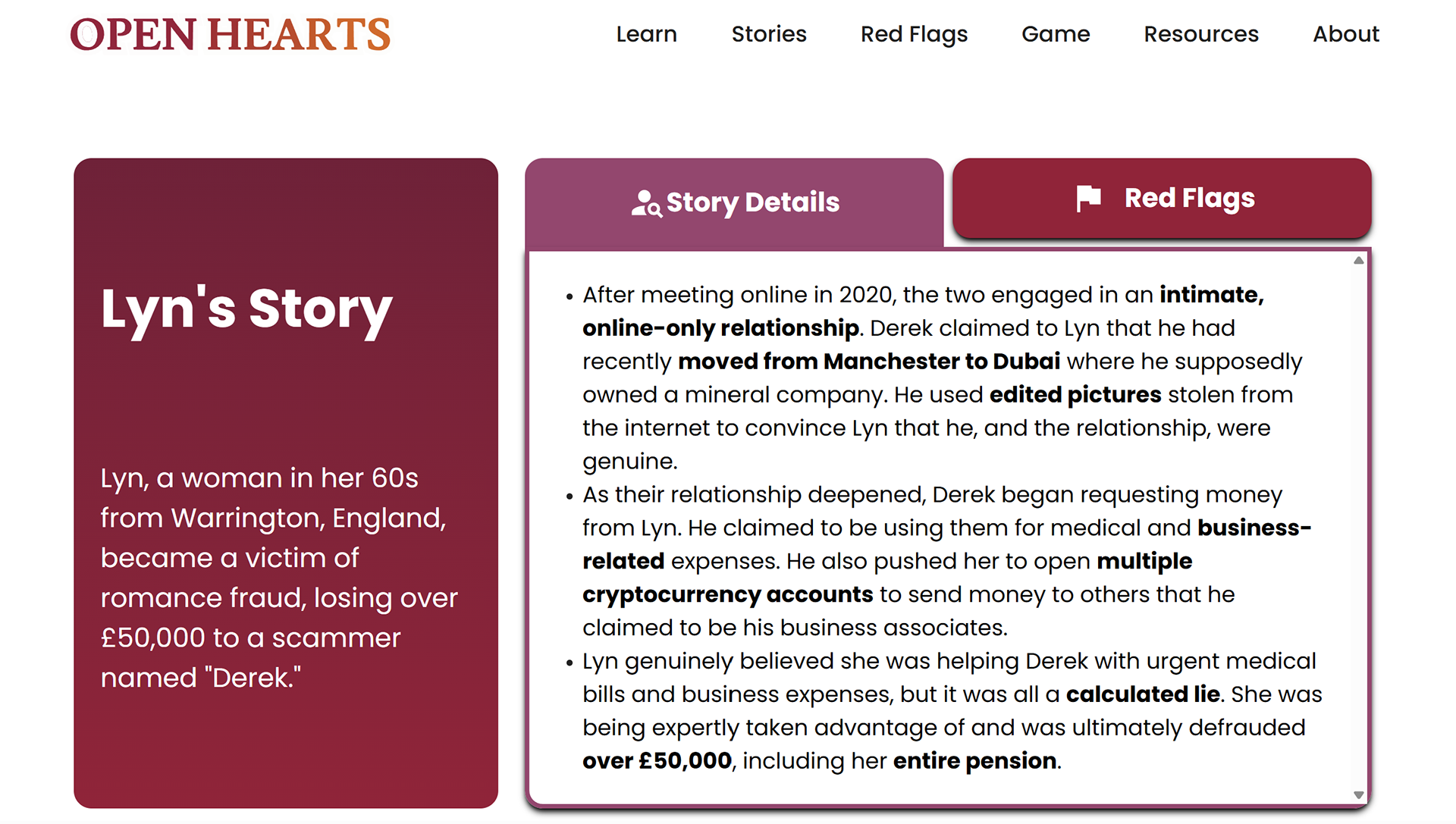
Figure out the red flags in various stories
Interactive knowledge check
The exhibit then shifts from passive learning to active participation through an interactive minigame. Users are presented with scenarios and asked to apply what they have learned to identify potential warning signs and determine whether a situation may indicate romance fraud; the interaction is intended to reinforce the information from the previous sections
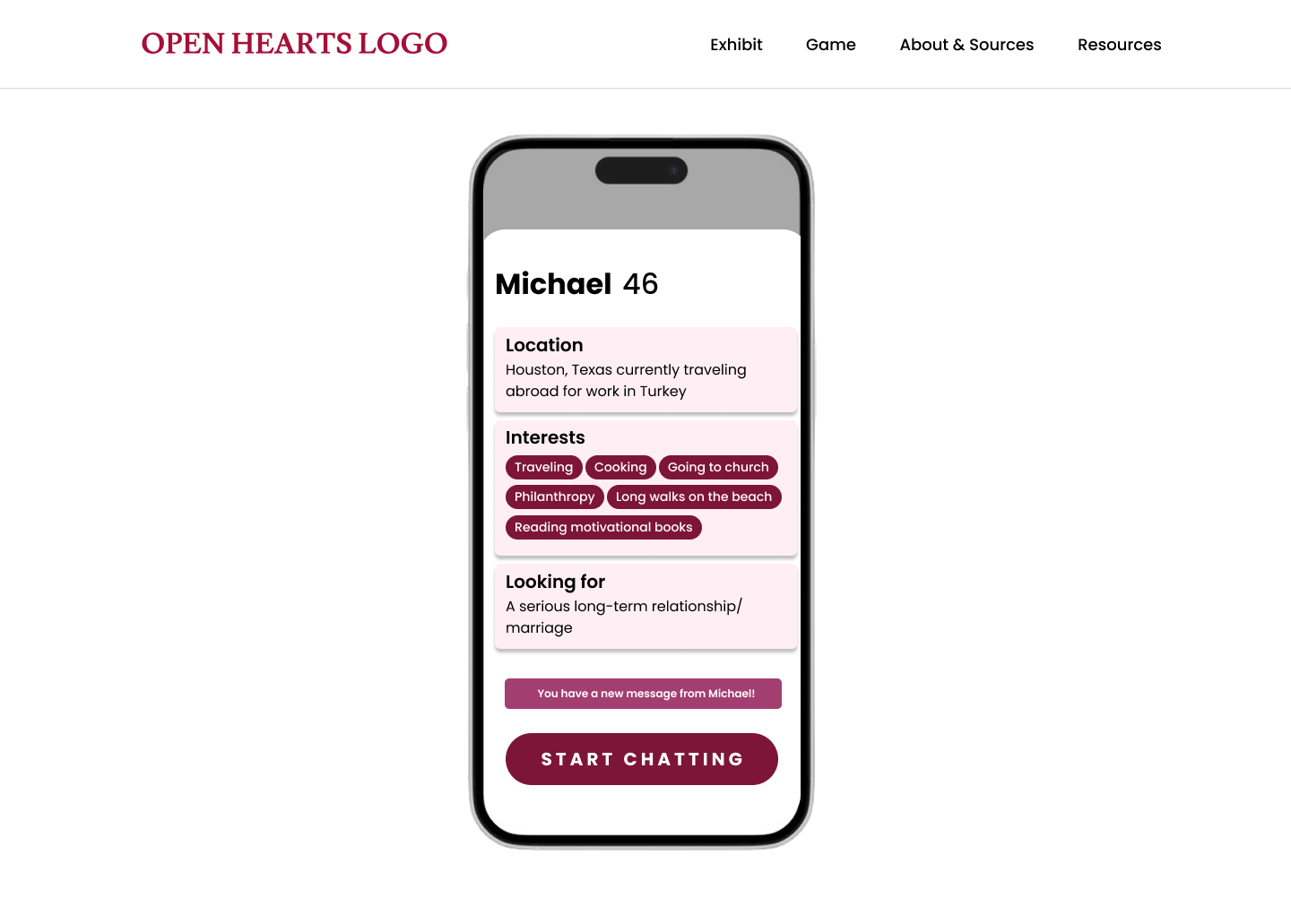
High-fidelity prototype of the profile screen
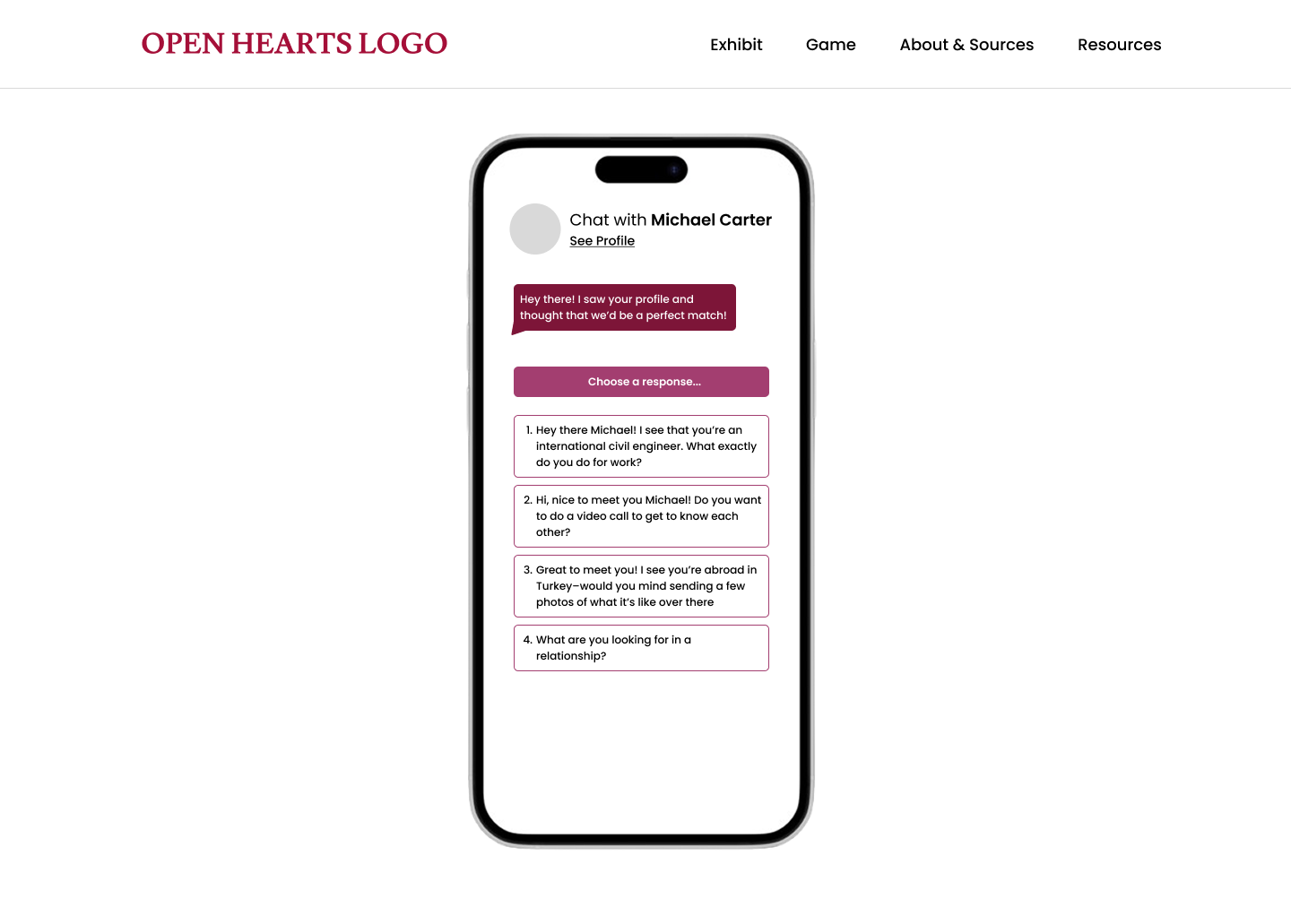
High-fidelity prototype of the chat screen
Resources and taking action
The experience concludes by giving users practical resources they can turn to if they encounter romance fraud or believe someone they know may be a victim. Resources include relevant support organizations, reporting avenues, and government agencies. This supports all of the learned information by leaving users with knowledge about what they can do next.
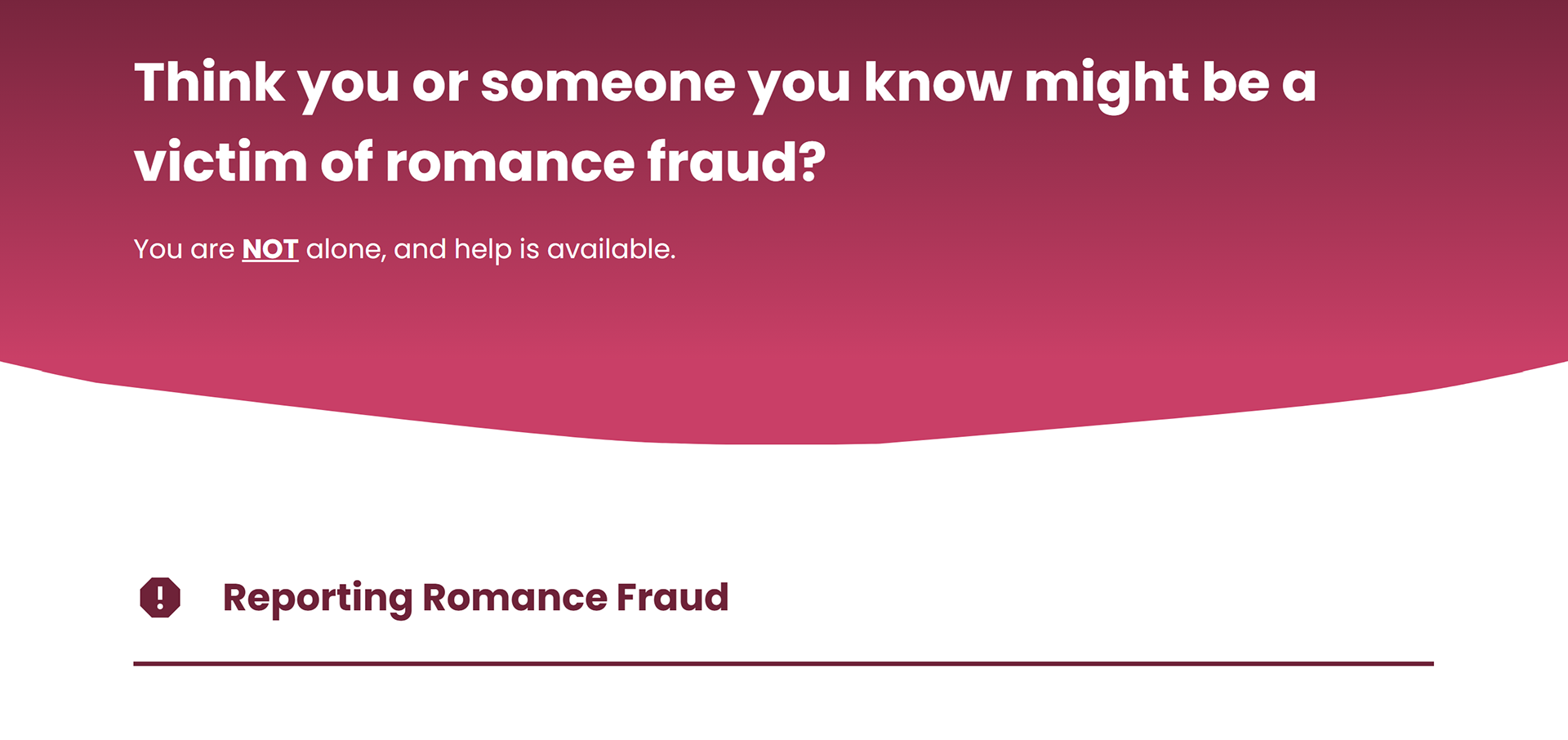
Find resources to help yourself or others who may be a victim
KEY DESIGN DECISIONS
The biggest challenge was keeping users engaged throughout an information-heavy experience.
Interactive elements
Our team asked, “how can a website encourage users to explore rather than simply scroll?” For Open Hearts, I experimented with various ways that users can interact with the information and graphics through hand-drawn wireframes. I then discussed my ideas with the other designers before developing the mid and high-fidelity wireframes. Together, we created several clickable elements throughout the experience that allow users to uncover information rather than seeing everything at once.
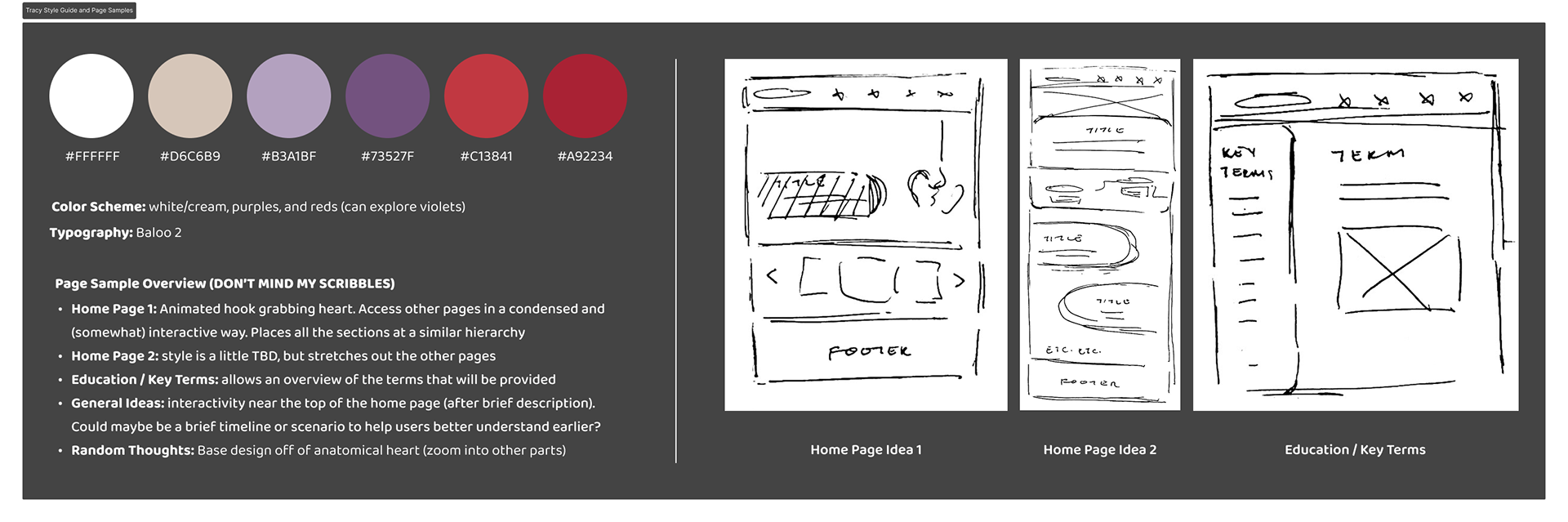
Wireframe sketches of the home page and learn section
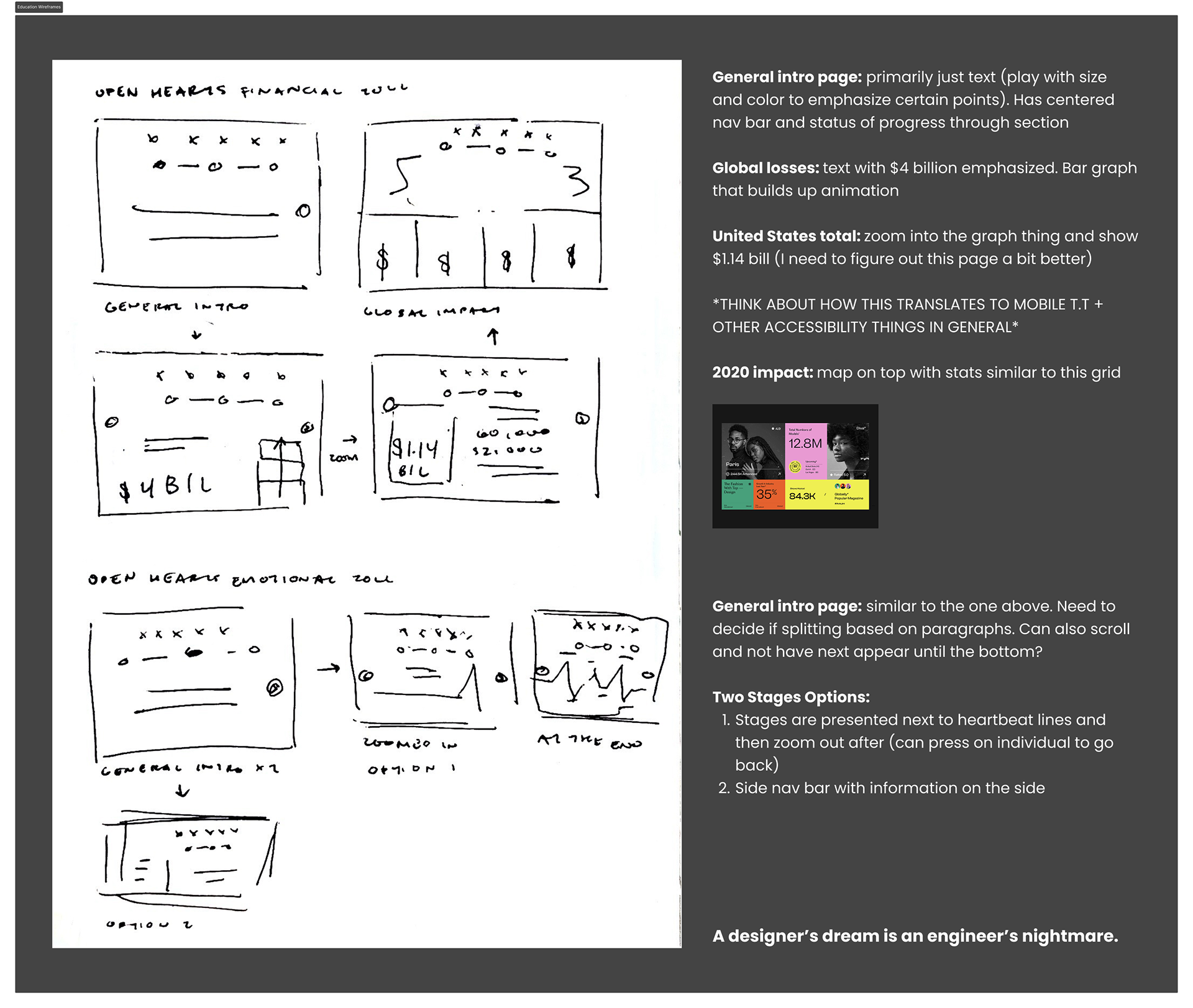
Wireframe sketches of the learn section
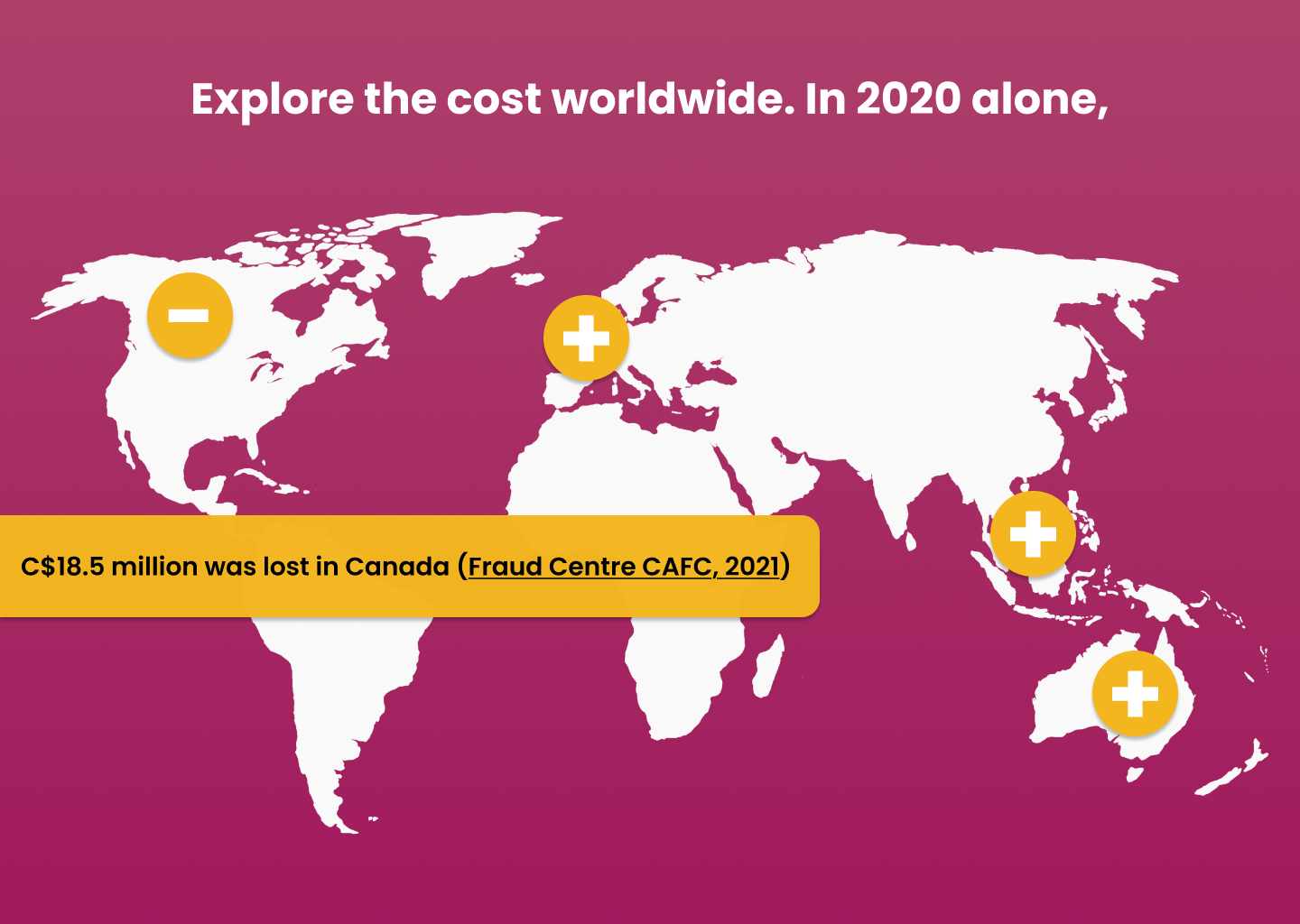
Final, interactive map
Applying information
We needed to ensure that users are able to identify romance fraud in application. The inclusion of the minigame therefore asks users to apply the concepts they have learned to specific situations, offering an opportunity to identify behavior in a low-stakes environment.
Using visual design to support storytelling
One of my biggest contributions to Open Hearts was the visual design of the exhibit. While the project required extensive UI/UX design, I also created many of the graphics and visual assets used throughout the experience.

Early wireframes for the exhibit opening sequence and the hook graphic used to pull the wordmark
REFLECTION AND CONCLUSION
Open Hearts taught me how to make information not only understandable, but memorable and actionable.
Creating an effective experience
Because the project's success depended on users retaining what they learned, I had to think beyond simply organizing information clearly. The research shaped not only the content of the exhibit, but the structure of the experience itself. I learned how interaction, visual storytelling, and pacing can work together to transform information into something more engaging and memorable.
Bringing visual design into an information-heavy experience
Creating the graphics and visual assets throughout the exhibit allowed me to bring my background in traditional and digital art into a UI/UX focused project. This taught me how illustration and visual design can support the information being presented.
Future goals
If I had more time, I would conduct usability testing with people across different age groups and levels of technological ability to understand whether the interactive elements are intuitive and if the provided information is easily retainable. I would also be interested in exploring additional interactive scenarios in which users can practice responding to fraudsters.